
The consistent shift from Androcentrism to Gynocentrism
It's been a one-way street, rather than a pendulum...

Excerpt from The Relentless War on Masculinity by David Maywald:
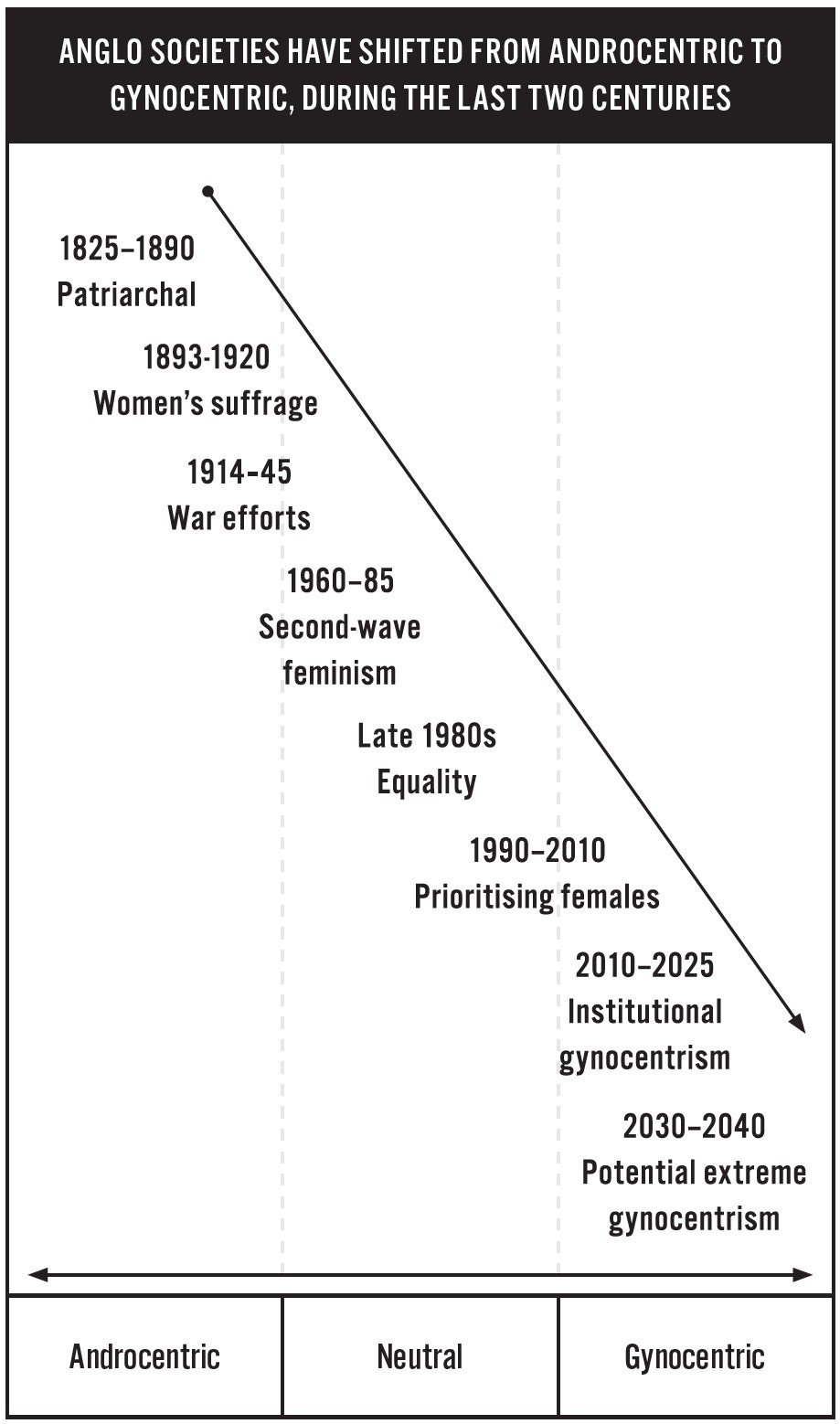
During the 19th and early 20th centuries, Anglo societies were unmistakably androcentric – male-led in law, politics and culture. The suffrage movements and the first wave of feminism secured the vote for women, while the two world wars brought women into the workforce in new ways. Second-wave feminism unfurled enormous changes and opportunities for girls and women.
By the late 1980s, Western societies had reached a rare moment of balance: legal equality between the sexes, equal pay protections and growing educational opportunities for all. This short period was neither androcentric nor gynocentric overall. But equality didn’t last.
During the next four decades, governments, universities, media and corporations embraced policies favouring women. Family law, hiring quotas, health campaigns and educational curriculums prioritise female needs and preferences. Cultural gynocentrism became institutionalised. Feminists captured organisations (including taxpayer-funded agencies) with a new mission to empower females. Affirmative action has persisted, with constant waves of “victimhood feminism” claiming females are perpetually oppressed.
Meanwhile, the struggles of boys and men have been ignored or denigrated, especially when they conflicted with fashionable narratives about “progress”.
In 2025, Anglo and Nordic countries are the most gynocentric societies. Within English-speaking nations, Canada and Australia are more gynocentric than the US (which has a substantial Christian population, large rural and urban areas, along with right-leaning and left-leaning cities and states).
There has never been a better time to be a girl or a woman, with abundant options in every area of their lives. And there are no better places to be female than in the Nordic and Anglo countries.
However, the improvements for women, gained during seven decades of political struggle and advocacy, have not diminished the appetite for continual change...
The e-book is available for A$5.99, US$3.99, C$5.99, €4.99 and £3.99. Plus there are paperback and audiobook versions from Amazon, Google Play, Apple Books, Booktopia, Barnes & Noble, Kobo, Walmart and many other retailers and book platforms: https://books2read.com/trwom