

Quarterly Update for 3Q26: Wins and Achievements for Men and Boys
From bipartisan breakthroughs in the United States to new research networks in Europe, the global movement is gathering momentum, building lasting institutions and broadening its support.
The pace of progress continues to accelerate.
If the first quarter of 2026 demonstrated that support for men and boys was entering the political mainstream, and the second quarter showed that lasting institutions were beginning to take shape, the third quarter has revealed something even more encouraging: the movement is expanding in both its reach and its ambition.
What was once a relatively fragmented collection of advocates and organisations is becoming an increasingly coordinated international movement, supported by legislators, researchers, educators, philanthropists, businesses and community leaders.
The United States has demonstrated particularly strong leadership, with bipartisan legislation, new state-level institutions and major national gatherings. Virginia has been the standout state, building on its historic achievements earlier this year and demonstrating how political leadership and community advocacy can work together.
Meanwhile, the United Kingdom is strengthening its research and policy infrastructure, continental Europe is establishing new organisations and international research networks, and advocates worldwide are becoming increasingly connected.
The most significant change is not simply the number of initiatives being announced. It is the growing emphasis on practical solutions, institutional accountability and evidence-based policies.
And the breadth of support is particularly encouraging. Democrats and Republicans, progressives and conservatives, academics and practitioners are increasingly finding common ground on issues that affect men, boys and their families.
This is not about competing with women and girls for attention or resources. It is about recognising that genuine gender equality requires us to acknowledge and address the disadvantages experienced by both sexes.
Healthier men, better-supported boys, stronger families and more constructive relationships between males and females are objectives from which everyone can benefit.
What follows is a celebration of the most important developments from July to September 2026, building on the progress documented throughout 2025 and the first half of this year.
United States: Bipartisan Leadership and Lasting Institutional Change
The United States continues to demonstrate how support for men and boys can transcend political divisions and bring together people with different perspectives.
During the third quarter, Democrats and Republicans introduced legislation addressing men’s health, education and community participation. State legislatures advanced their own initiatives, while philanthropic organisations and research institutions helped develop the evidence and infrastructure needed to support effective policies.
The breadth of this activity is particularly noteworthy.
Men’s issues are increasingly being considered not as isolated concerns, but as part of wider discussions about education, economic opportunity, public health, family wellbeing and social cohesion.
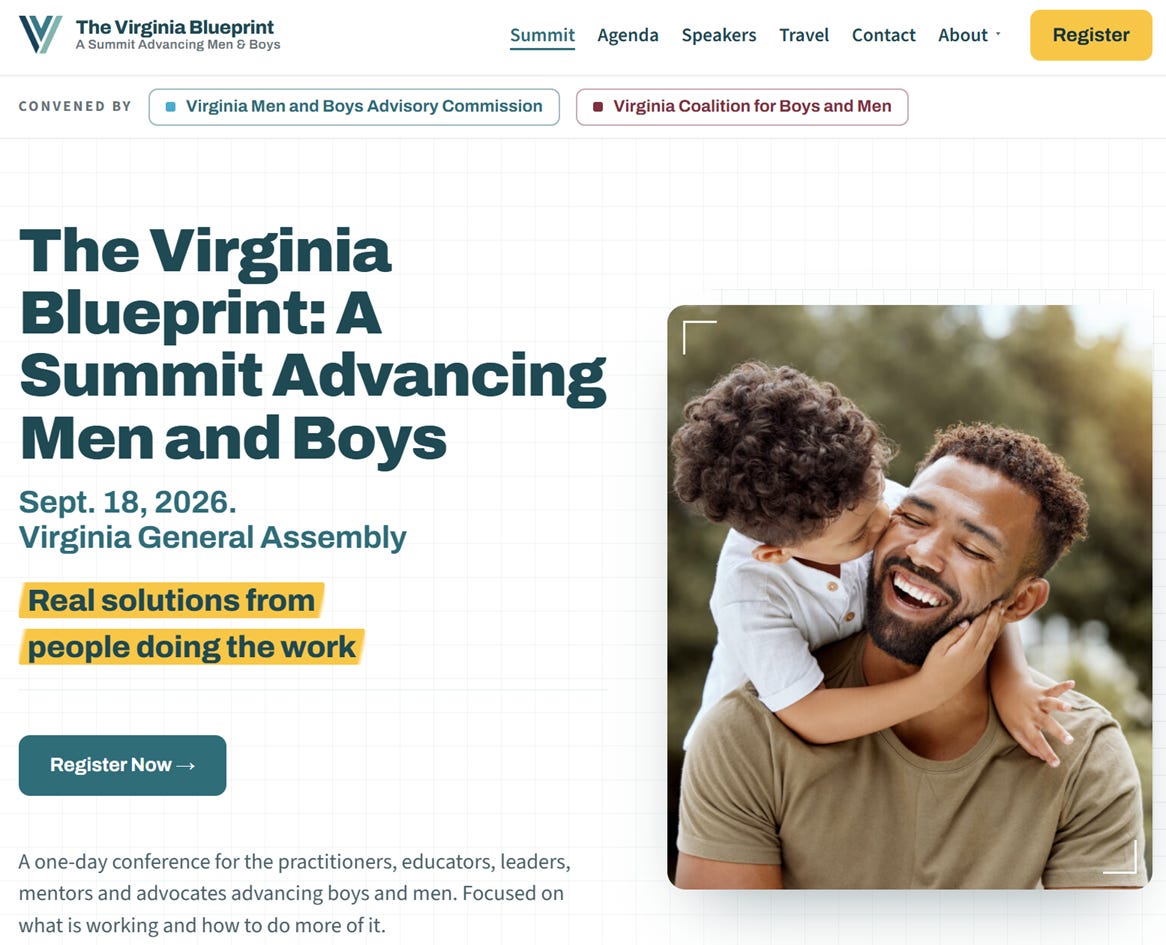
Virginia: From Historic Legislation to a National Blueprint
Virginia has been at the centre of some of the most significant developments of 2026.
The state began the year by establishing the first Boys and Men Advisory Commission of its kind in the United States, with overwhelming bipartisan support.
During the third quarter, that legislative achievement began translating into practical action.
Two people deserve particular acknowledgement for their contributions throughout the year: Emma Johnson and Josh Thomas.
Emma, founder and president of the Virginia Coalition for Boys and Men, has helped bring together a statewide network of advocates, researchers, educators, fatherhood organisations and community leaders.
Josh Thomas, a Democratic member of the Virginia House of Delegates, was the chief patron of the legislation establishing the Commission and has subsequently helped lead its work as chair.
Their complementary contributions illustrate what becomes possible when civil society and elected representatives work together towards shared objectives.
Emma has helped build the coalition and connect people doing practical work, while Josh has helped establish a permanent institutional mechanism within government.
Together, they have helped make Virginia a prominent example of constructive, coordinated advocacy for men and boys.
The Virginia Blueprint Summit: A Landmark Gathering
The most significant event of the quarter was The Virginia Blueprint: A Summit Advancing Men and Boys, held at the General Assembly Building in Richmond on 18 September.
Convened by the Virginia Boys and Men Advisory Commission and the Virginia Coalition for Boys and Men, the summit brought together legislators, researchers, educators, philanthropists, mentors and community leaders.
Its emphasis was practical: identifying successful programmes, sharing experience and developing strategies that can be replicated and expanded.
The programme included Richard V. Reeves, Virginia House Speaker Don Scott, Delegate Josh Thomas and King Randall, founder of The X for Boys.
Participants had opportunities to present successful initiatives, discuss legislative approaches and explore funding opportunities, including a $10,000 programme-pitch competition.
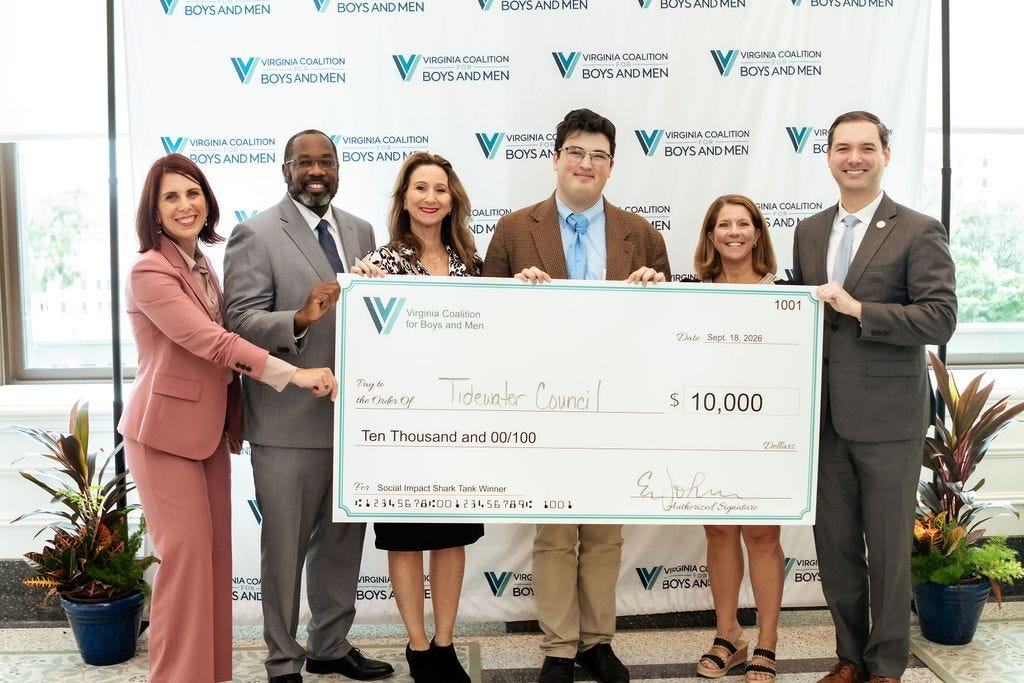
The summit demonstrated how Virginia’s institutional framework is helping to connect policymakers with organisations delivering services directly to boys and men.
Its wider significance lies in the potential for other states to learn from Virginia’s experience and adapt successful approaches to their own circumstances.
Virginia’s Advisory Commission Gets to Work
The Virginia Boys and Men Advisory Commission held its inaugural meeting on 20 July, following the passage of its establishing legislation earlier in 2026.
The legislation received substantial bipartisan support, passing 91–6 in the House of Delegates and unanimously in the Senate.
Governor Abigail Spanberger subsequently signed it into law.
The Commission is responsible for examining educational inequalities, economic opportunities, health disparities, family life and the effects of social media.
Further meetings during the quarter brought together researchers, educators and workforce-development specialists.
Its work has included examining boys’ literacy, educational disengagement, career pathways and opportunities to recruit more men into teaching.
Crucially, the Commission is a permanent statutory body rather than a temporary initiative dependent on a particular administration.
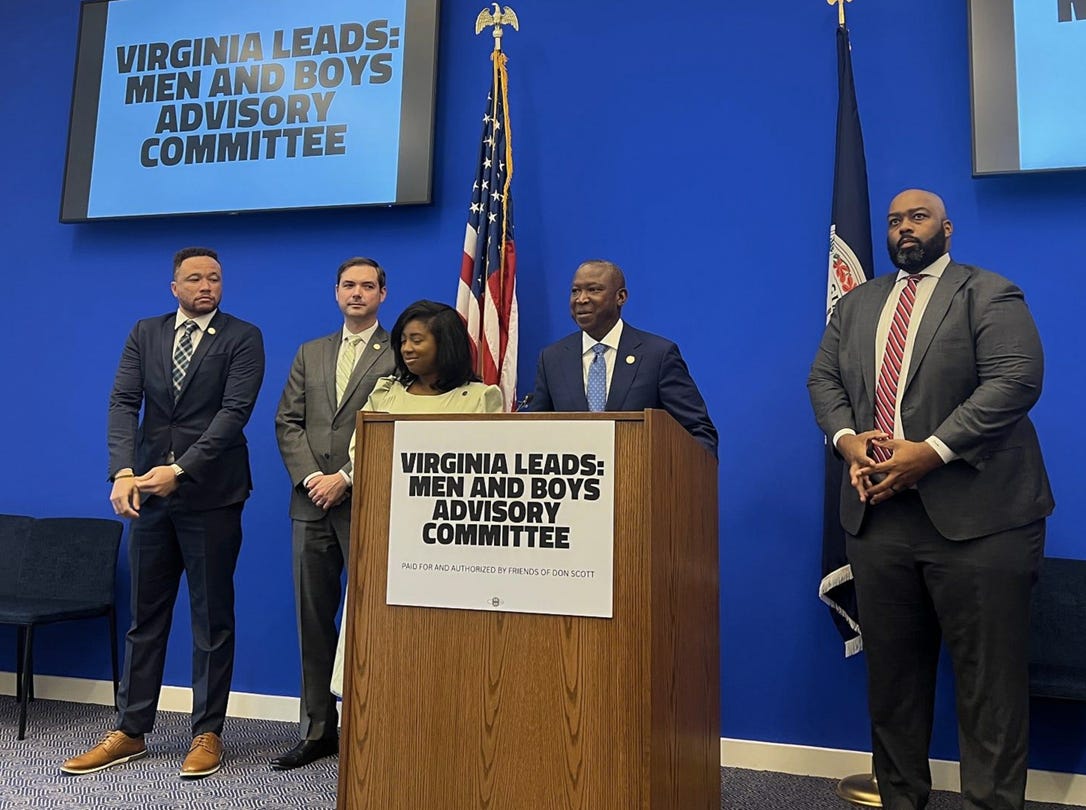
Virginia has therefore moved through several important stages in a remarkably short period: identifying a policy gap, passing legislation, establishing a commission and convening a major summit focused on practical solutions.
That combination of political leadership, institutional continuity and community participation provides a model for other jurisdictions to replicate and improve upon.
Bipartisan Federal Legislation to Establish an Office of Men’s Health
Another significant development came in July, when Democratic Senator Ruben Gallego of Arizona and Republican Senator Roger Marshall of Kansas introduced legislation to establish a federal Office of Men’s Health.
The Senate bill followed companion legislation introduced in February by Democratic Representative Troy Carter of Louisiana and Republican Representative Greg Murphy of North Carolina.
The proposed State of Men’s Health Act would require the Government Accountability Office to examine men’s health and identify disparities.
It would also establish an Office of Men’s Health within the Department of Health and Human Services.
The proposed office would provide a dedicated institutional focus for understanding and improving men’s health outcomes.
The significance is twofold.
First, men’s health would receive more systematic attention within federal government, creating opportunities to coordinate research, identify priorities and develop more effective interventions.
Second, the involvement of legislators from both major parties demonstrates that men’s health can be an area of cooperation, even within a highly polarised political environment.
The legislation remains under consideration, but its introduction in both chambers represents an important step towards a more comprehensive national approach.
More Male Teachers, Mentors and Community Leaders
Arizona Senator Mark Kelly introduced two further bills on 16 July: the Educators for America Act and the Building Community in America Act.
The first seeks to strengthen pathways into teaching, including paid teacher-training opportunities, with an emphasis on recruiting more men.
The second seeks to expand participation in national and community service, creating additional opportunities for men to contribute as mentors, volunteers and community leaders.
Democratic Congressman Adam Smith is leading companion legislation in the House, while Republican Senator John Curtis is a cosponsor of the Building Community in America Act.
Kelly’s office highlighted that men account for only 23% of American public-school teachers and 28% of AmeriCorps volunteers.
These proposals recognise the importance of providing boys and young men with opportunities to develop positive relationships with adults, including male role models.
They also recognise that many men want opportunities to contribute meaningfully to their communities.
The bills have attracted support from educational leaders, mentoring organisations, faith leaders and researchers, including Richard Reeves.
Washington Hosts the Symposium on Young American Men
The second Symposium on Young American Men was held in Washington, D.C., on 24–25 September.
Organised by The Lafayette Company, the bipartisan gathering brought together researchers, policymakers, educators, mental-health specialists and community leaders to examine the challenges facing young American men.
The programme addressed education, employment, loneliness, mental health, addiction, fatherhood, marriage and community participation.
Speakers included Ronald Henry, Lisa Britton and Warren Farrell, alongside a wide range of researchers and practitioners. Ed Bartlett and Larry DeMarco represented the International Council for Men and Boys.
The event also featured new polling of 800 registered male voters aged 18–30, providing additional insights into young men’s experiences and priorities.
Importantly, the symposium was livestreamed free of charge, extending its reach beyond Washington and enabling an international audience to participate.
The event illustrated the growing emphasis on connecting research with practical programmes and policy development.
California, Male Educators and New Research
California also contributed to the quarter’s momentum.
The California Assembly’s Select Committee on Developing Pathways to Purpose for Young Men, chaired by Assemblymember Avelino Valencia, held its first hearing on 12 August.
The committee provides another forum for examining young men’s experiences and identifying opportunities to improve their participation in education, employment and community life.
Meanwhile, the Male Educator Network & Policy Institute held its Let the MEN Speak event on 21 July.
The discussion featured Richard Reeves, Curtis Valentine, Pedro Noguera, Michael Orcutt and Ivan Monay.
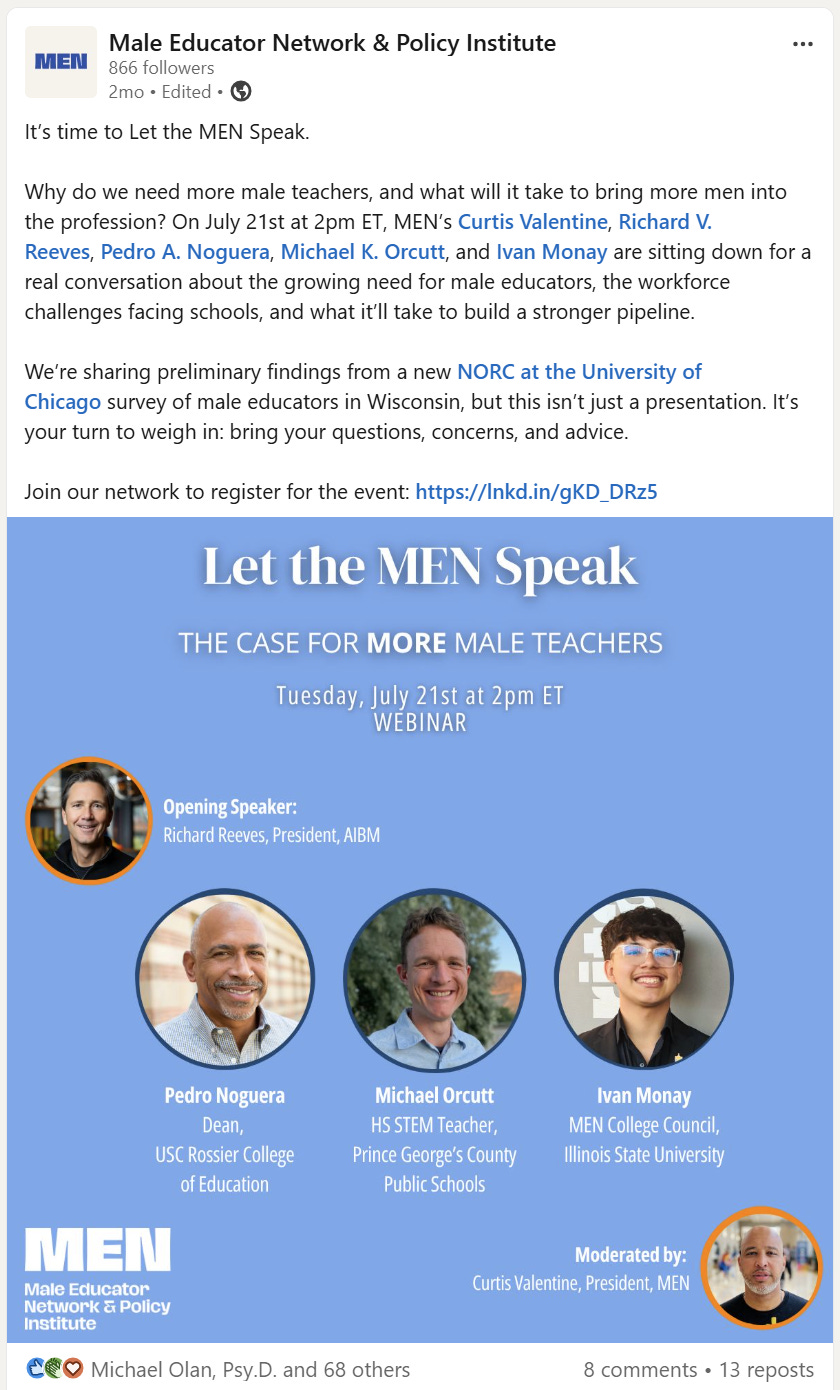
It explored the shortage of male teachers, barriers to entering the profession and strategies for strengthening recruitment.
Preliminary findings from a NORC survey of male educators in Wisconsin also informed the discussion.
The American Institute for Boys and Men continued expanding the research agenda, including through Allen Downey’s research brief, Is It Inevitable That Men Die Younger Than Women? Looking at Evidence and Policy Solutions.
The brief examines international differences in male longevity and considers the extent to which mortality disparities can be reduced through effective policy.
Its underlying message is encouraging: while biological differences contribute to longevity, many of the factors associated with premature male mortality are preventable.
The State of American Men 2026
The release of State of American Men 2026 on 25 September provided another substantial contribution to the evidence base.
Produced by Equimundo, the Young Men Research Project and YouGov, the report examined the experiences and attitudes of American men aged 18–29.
Its findings included that 74% believed financial security was much harder to achieve than it had been for their fathers’ generation.
Nevertheless, 54% believed the American Dream remained personally attainable.
The report also examined attitudes towards public policy, democracy, artificial intelligence, online influencers and speculative financial activities.
The findings offer a more nuanced picture of young men than narratives focused exclusively on either disadvantage or disaffection.
Economic uncertainty is a substantial concern, but many young men continue to express aspirations for financial security, meaningful relationships and a better future.
New York: Changing How Society Engages With Men
The second annual Marketing to Men Summit took place in New York on 24 September.
Organised by Antenna Up under the theme Cooler to Care, the summit brought together marketing professionals, media executives, researchers, brands and content creators.
The event examined how businesses and media organisations can engage men in more authentic, constructive and multidimensional ways.
Its programme included representatives from major brands and organisations, including Procter & Gamble, Nielsen, Peloton and Pinterest.

According to the organisers, more than 150 people attended in person, with another 150 joining the livestream.
This development highlights an important additional dimension of the movement.
Improving men’s wellbeing is not exclusively the responsibility of governments and health services. Businesses, advertisers and media organisations also influence how masculinity is understood and represented.
Together, these American developments demonstrate the breadth of activity taking place across government, research, education, philanthropy, community services and the private sector.
United Kingdom: Strengthening the Evidence and Policy Framework
The United Kingdom continued building on the institutional progress documented during the first half of 2026.
The third quarter brought further developments in boys’ education, men’s mental health, policy research and political engagement.
Particularly encouraging is the growing willingness to address male disadvantage within mainstream public policy, while recognising that supporting boys and girls should be complementary rather than competing objectives.
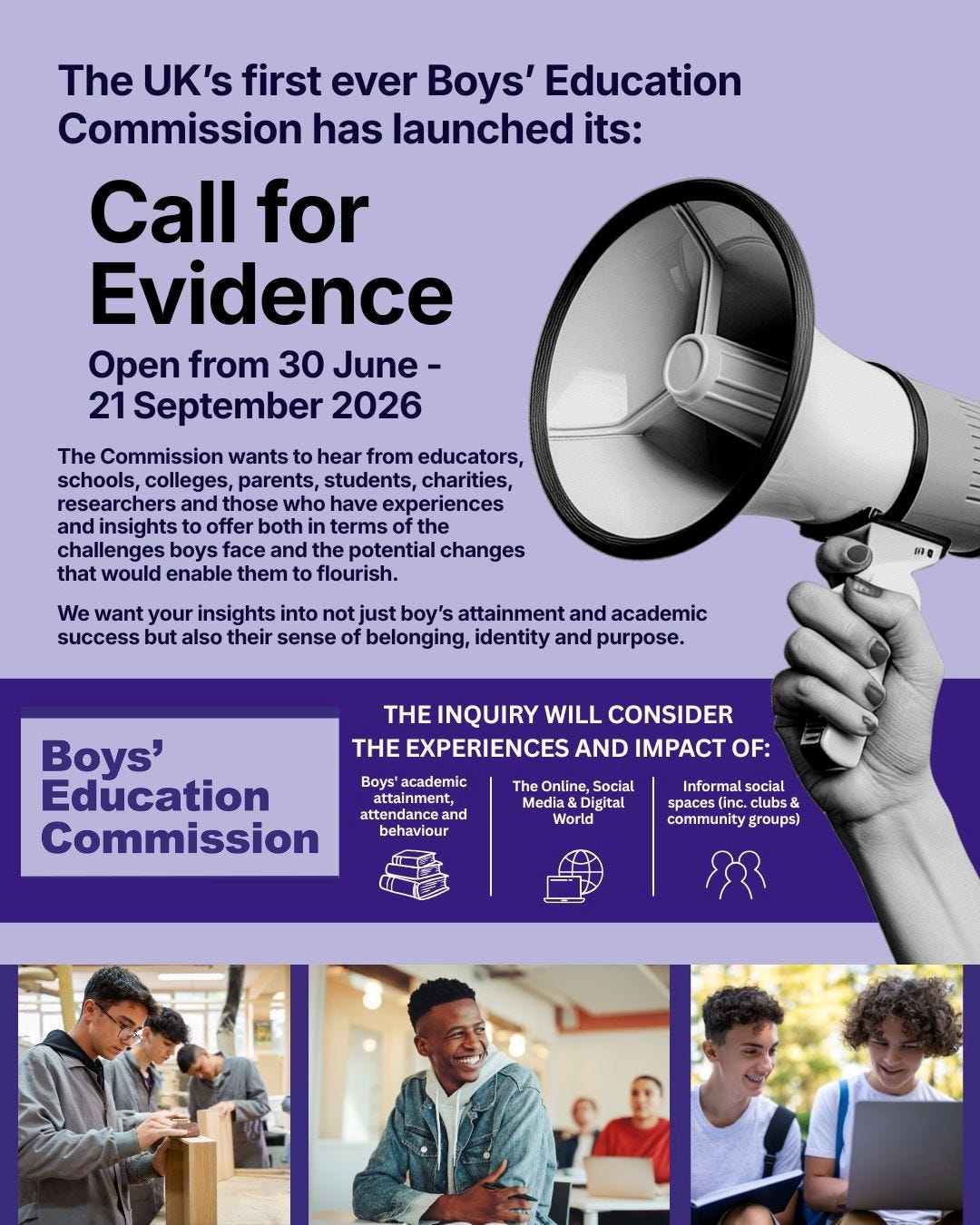
The Boys’ Education Commission Calls for Evidence
One of the quarter’s most important UK initiatives was the Boys’ Education Commission’s Call for Evidence, which ran from late June until 14 September.
Chaired by Peter Hyman and hosted by the Centre for Policy Research on Men and Boys (CPRMB), the independent commission invited contributions from schools, teachers, researchers, parents, students, charities and other stakeholders.
Its remit extends beyond examination results to consider boys’ broader development, educational engagement, confidence and preparation for adult life.
The Commission explicitly recognises that addressing boys’ educational challenges should not come at the expense of supporting girls.
This approach offers an opportunity to identify successful educational practices and translate research into practical recommendations.
Two Important Reports from CPRMB
The Centre for Policy Research on Men and Boys released its updated Missing Men 2026 report on 31 August.
The report uses 25 indicators to examine men’s and boys’ circumstances across employment, education, health and crime.
Its findings indicate that many outcomes remain worse than before the pandemic, particularly in unemployment and mental health. However, it also identifies gradual improvements in physical health and some educational outcomes.
The report calls for greater consideration of male-specific circumstances in public policy, while recognising that class, geography and other factors influence individual experiences.
CPRMB also published the interim report Evaluating and Scaling Male Community-Based Programmes, supported by the Randal Foundation.
This report examines how community-led, non-clinical initiatives can support men’s mental health and contribute to suicide prevention.
It explores how successful programmes can be evaluated and expanded without losing the characteristics that encourage men to participate.
Together, these publications strengthen the evidence available to policymakers, funders and organisations working directly with men.
The emphasis is shifting towards an increasingly practical question: how can successful interventions be identified, evaluated and expanded to reach more men?
Books, Political Recognition and Support for Male Survivors
August brought two welcome additions to the literature on men and boys.
Andrew Pain’s Honestly, MAN, released on 6 August, and Mike Bell’s Yes, He Can!, released on 3 August, contribute to the growing body of writing on men’s experiences, development and wellbeing.
The political conversation also continued to evolve.
In an article for The Spectator, The Left Has a Problem With Boys and Men, Labour MP Jake Richards discussed the challenges facing men and boys and the need for a more substantial government policy framework.
Richards connected the government’s work on men and boys with wider concerns about economic opportunity, social cohesion and relationships between men and women.
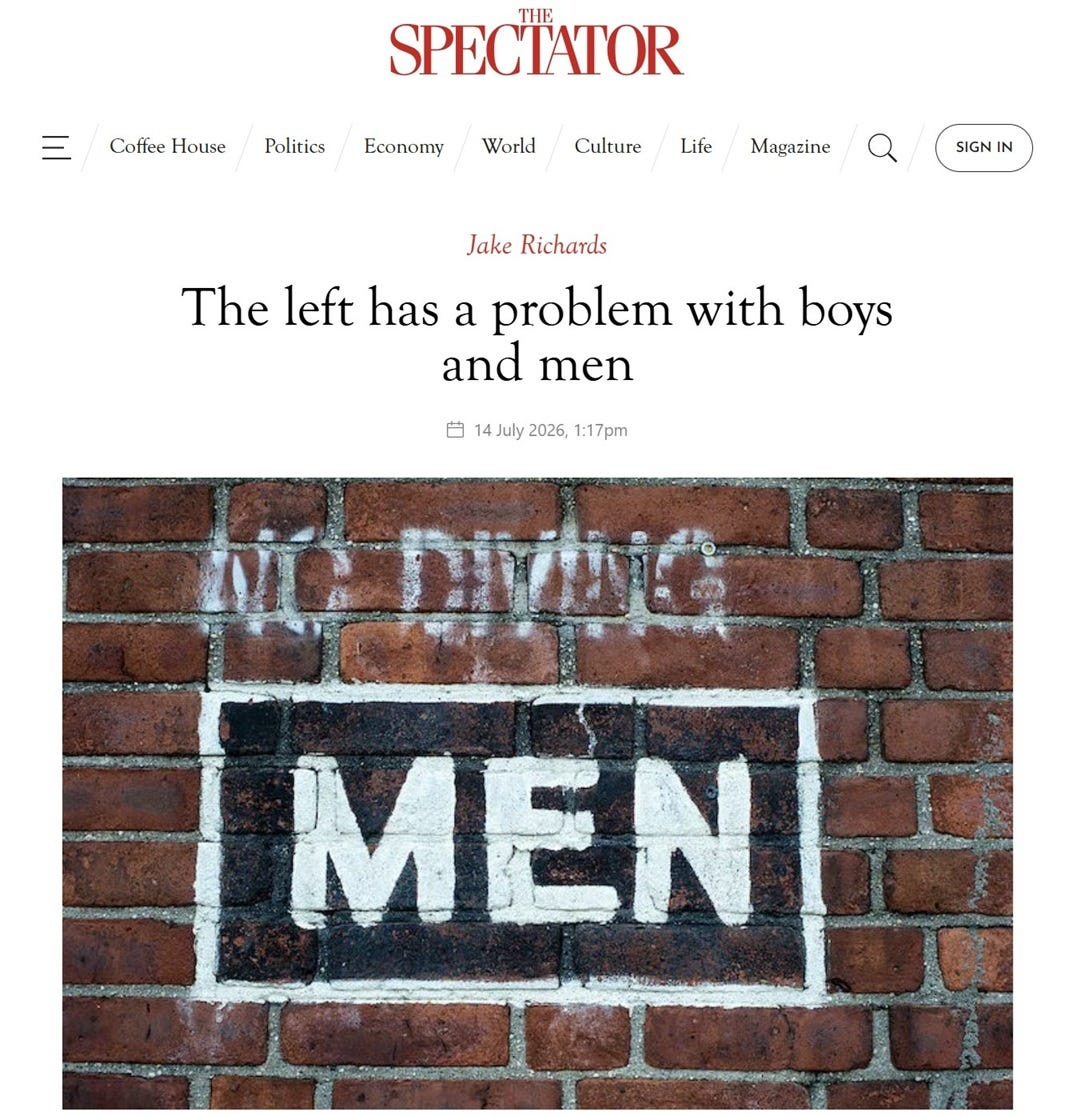
Richard Reeves subsequently shared this article, highlighting the growing recognition of men’s and boys’ issues within the British centre-left.
Another encouraging development came from the partnership between Movember UK and We Are Survivors. These two organisations collaborated on a public survey examining attitudes towards sexual harm experienced by male victims and survivors.
The initiative seeks to improve understanding of male victimisation and the experiences of survivors.
Recognising male victims is an important part of developing services that respond to everyone affected by sexual violence, while reducing the stigma that can discourage men from seeking help.
View the survey initiative on Instagram.
Taken together, these developments illustrate the growing breadth of Britain’s approach: stronger research, more constructive political engagement and greater recognition of the diverse needs of men and boys.
Europe: New Institutions and International Research Networks
Continental Europe contributed several developments that demonstrate how the men’s movement is extending beyond the English-speaking world.
The emergence of new research networks, representative organisations and policy declarations is helping establish the foundations for more coordinated European cooperation.
A New Nordic Network for Boys and Men
Kristian Landsgård announced a two-year initiative to establish a Nordic research network focused on boys and men.
Working with the Norwegian Institute for Social Research in Oslo, he will bring together researchers from across the Nordic countries to examine issues affecting male wellbeing.
The project is supported by the Gambrell Foundation and Rise Together, a donor-advised fund established by Richard Reeves, founding president of the American Institute for Boys and Men.
Its objectives are to promote high-quality interdisciplinary research and contribute to evidence-based public debate and policymaking.
The initiative will explore a range of issues, including education, employment, fatherhood, family life and the influence of social and economic circumstances on male wellbeing.
It also demonstrates the growing international influence of American research and philanthropy.
Importantly, the Nordic countries have substantial experience developing social policies, collecting longitudinal data and evaluating public interventions.
Bringing researchers together across national and disciplinary boundaries creates opportunities to identify successful approaches, understand their limitations and inform policy development internationally.
Landsgård has introduced the project through his Substack, On Nordic Boys and Men.
A Constructive Declaration from European Fathers
The Platform for European Fathers (PEF) issued its updated Declaration on Fathers, Men and Boys in August.
The declaration sets out principles for a more balanced and inclusive approach to European equality policy.
It addresses shared parenting, father involvement, men’s health, male victims of violence, boys’ education and the importance of recognising male-specific disadvantages.
It also calls for evidence-based policymaking and greater recognition of fathers, men and boys within European social and equality frameworks.
One of its most constructive features is the emphasis on cooperation and children’s wellbeing.
The declaration recognises that the interests of mothers, fathers and children are closely connected, and that equality policies should acknowledge the needs and contributions of both sexes.
Its emphasis on working through existing European institutions provides a practical approach to achieving lasting change.
Germany Establishes a Men’s Council
Another encouraging development was the establishment of the German Men’s Council (Deutscher Männerrat e.V.).
Psychologist Max Schwarz and fellow contributors to the German Men’s Manifesto initiated the organisation as an independent platform addressing the interests and wellbeing of boys and men.
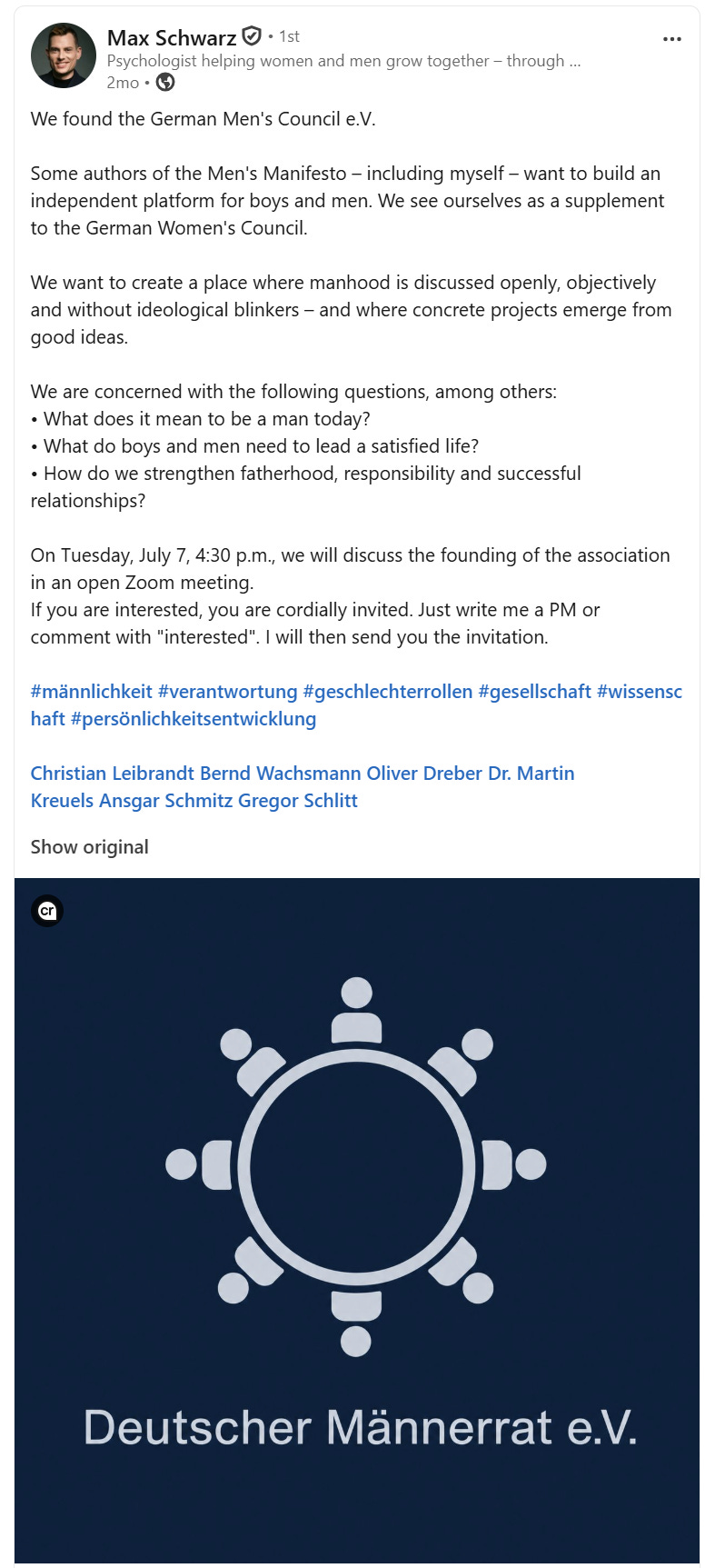
The Council is intended to complement the German Women’s Council, providing a forum for research, discussion and practical initiatives.
Its stated interests include masculinity, fatherhood, responsibility, relationships and the conditions that help men lead fulfilling lives.
The emergence of a dedicated organisation in Germany adds another national voice to the developing European network.
Together, these initiatives demonstrate how the men’s movement is progressing from individual advocacy towards more coordinated research, institutional representation and international cooperation.
Global Perspectives: A Much More Connected and Inclusive Movement
Beyond the United States and Europe, the third quarter of 2026 has demonstrated the increasing international reach of organisations supporting men and boys.
An important feature of this growth is the development of resources that make it easier for researchers, policymakers and community organisations to identify one another, share knowledge and collaborate.
Men Atlas Maps More Than 500 Organisations
Max Schwarz officially introduced Men Atlas, a free global map of organisations supporting men’s and boys’ health and wellbeing.
At its launch, the map included 503 organisations worldwide, covering men’s mental health, crisis support, fatherhood, mentoring, community initiatives, health promotion, research and advocacy.
Schwarz developed the resource to make this fragmented field more visible and accessible.
He has also invited researchers, practitioners and organisations to contribute corrections and additions, allowing the map to develop as a living resource.
The significance extends beyond simply documenting the number of organisations involved.
For years, many people working to support men and boys have operated with limited knowledge of similar initiatives elsewhere.
Men Atlas provides a foundation for international cooperation, making it easier to identify existing programmes, share experience and develop partnerships.
Celebrating the Authors, Elders, and Thought Leaders…
August saw the publication of David Maywald’s second book, 100 of the Best Books for Men: Honouring the Authors, Elders, and Thought Leaders.
This compendium celebrates the writers, speakers, and thinkers who have contributed to our deep understanding of masculinity, male psychology, fatherhood, relationships, personal development and the challenges facing men and boys.
Drawing on more than 300 book reviews written over seven years, it is intended to introduce readers to influential ideas and encourage further exploration.
It also acknowledges the intellectual foundations on which the contemporary men’s movement has been built.
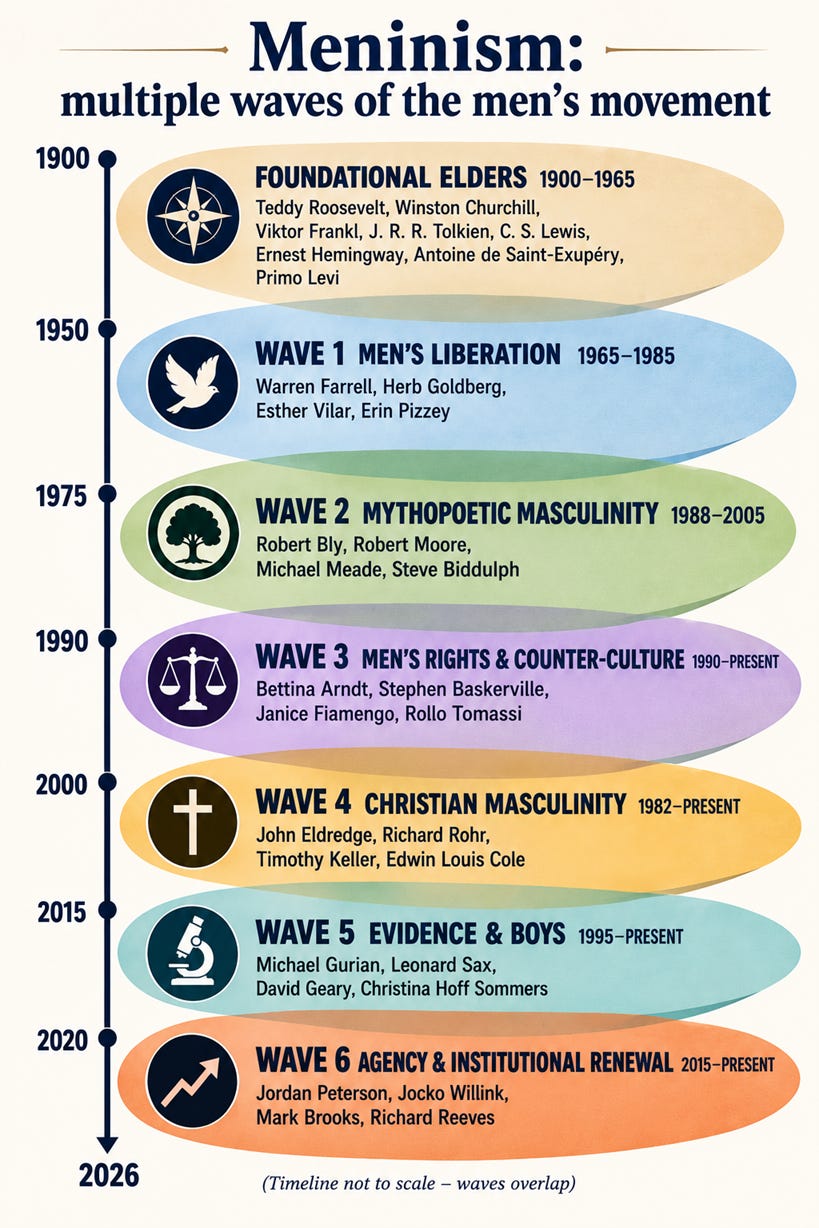
This movement needs more than legislation and institutions. It also needs a strong intellectual foundation, an appreciation of the contributions of earlier generations and a willingness to learn from different perspectives.
The book is available to read free of charge through the National Library of Australia.
Read 100 of the Best Books for Men.
International Council for Men and Boys: Recognising Fathers
The International Council for Men and Boys (ICMB) continued its international advocacy during the quarter.
On 2 July, ICMB issued a press release titled UN Urged to Recognize Fathers as Essential to Children’s Well-being.
The statement called for greater recognition of fathers within United Nations family policy, drawing attention to the importance of father involvement and the challenges experienced by separated fathers.
It also called for greater consideration of shared parenting and renewed international research into fathers and family policy.
The statement was the third in a series addressing family issues, following earlier statements on marriage and birth rates.
ICMB’s broader work across the twelve areas of male disadvantage provides an international framework for connecting research, advocacy and practical solutions.
Its work illustrates the importance of ensuring that the needs of men and boys are considered within international discussions about human rights, social development, health and family wellbeing.
Conclusion: From Momentum to Lasting Change
The third quarter of 2026 has demonstrated that the global movement supporting men and boys is becoming broader, more coordinated and increasingly focused on practical solutions.
The United States has provided examples of bipartisan cooperation, legislative action and institutional development. Virginia, in particular, has demonstrated how political leadership and community advocacy can work together to establish lasting mechanisms for change…
The United Kingdom has continued strengthening its evidence base, expanding its research infrastructure and developing a more constructive public conversation.
Continental Europe has contributed new research networks, representative organisations and policy declarations, while international initiatives are making the movement more visible and connected.
Perhaps most encouraging is the growing diversity of people and organisations contributing to this work.
Researchers, policymakers, educators, philanthropists, businesses, community organisations and individual advocates are increasingly recognising that the challenges facing men and boys deserve sustained attention.
Nevertheless, progress must ultimately be measured by outcomes rather than announcements.
Legislation must be implemented. Research must inform effective interventions. Successful community programmes need sustainable funding, and institutions must remain accountable for the improvements they seek to deliver.
Educational underachievement, suicide, premature mortality, social isolation and family disadvantage remain serious challenges.
But the developments of 2026 provide genuine reasons for hope…
The conversation has moved well beyond asking whether the challenges facing men and boys deserve attention. Increasingly, governments, researchers and community organisations are asking a more constructive question:
What practical actions can we take together to improve the lives of men and boys?
And the answer is becoming clearer.
We need better evidence, effective policies, stronger institutions, greater cooperation and a willingness to recognise successful initiatives wherever they emerge.
Above all, we need a shared vision that recognises the wellbeing of men and women as complementary rather than competing objectives…
We can celebrate masculinity while respecting femininity. We can address male disadvantage without diminishing the challenges facing women and girls. And we can strengthen fatherhood, education, health and relationships in ways that benefit entire families and communities.
The achievements of this quarter demonstrate what becomes possible when people from different backgrounds work together towards common objectives.
The foundations for further progress are being established. The challenge now is to translate that momentum into meaningful and lasting improvements.
A better future for men and boys is a better future for everyone.
David Maywald
Chair of the International Council for Men and Boys (ICMB)
Executive Leader for International Men’s Day (IMD)
As glad as I am to see that something is happening, I am also very, very worried. Nothing in here recognizes or supports boys' or men's achievement. More male teachers has been studied and found to have mixed results at best.
The interventions target shaping men and boys, not supporting us in growing or achieving anything. If we create a world where norms for women center work, growth and achievement and norms for men center fatherhood we are "flipping the script", not creating equality.
Review of evidence on male teachers: https://journals.sagepub.com/doi/10.1177/00027162261429523
Great progress, yes. But we seem assiduously to be avoiding addressing the issues that underlie many of the problems facing boys and men, which for purposes of a Substack comment, might be summarized as deeply entrenched, powerfully vested interests that hold women and girls to be generally superior to men and boys and therefore deserving of superior protections and greater breadth of life options. Imagine how ineffectual the women's movement would have been if it had failed to call attention to notions of male superiority and female inferiority. Converting much injustice to zero injustice for men and boys would not constitute a zero-sum game. It would instead open the door to infinity.